


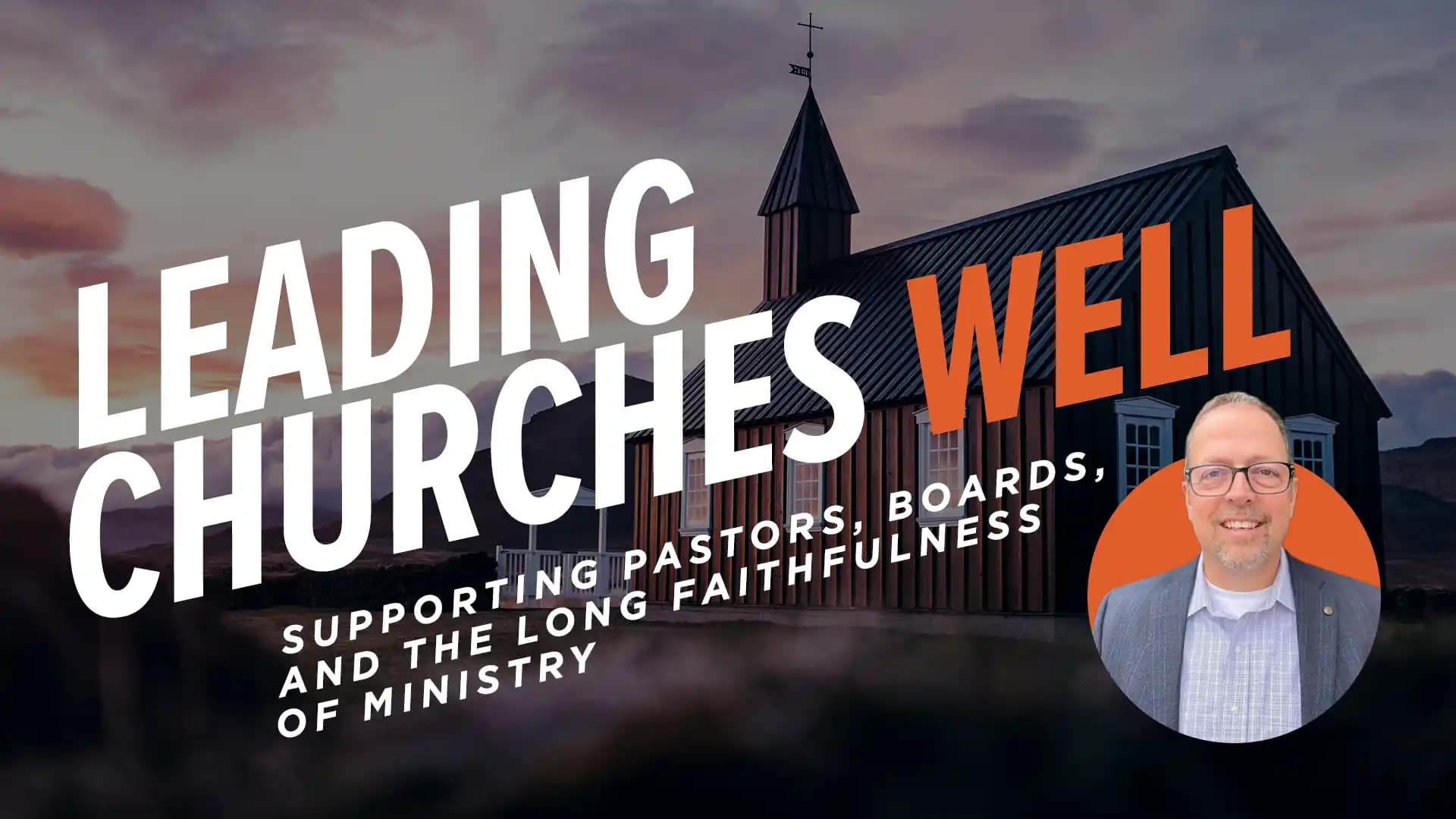
In this episode of the Courageous Ambassador podcast, Dr. Bryan Walker, president of the Grace Gospel Fellowship, sits down to discuss the critical work of building healthy churches in modern America. From navigating complex church board relationships to launching innovative pastoral training programs, Dr. Walker shares insights from his 25 years serving ministries and his research on church health. The conversation explores what draws young pastors to ministry today, the post-COVID challenges facing church leadership, and an ambitious vision for equipping 100 pastors annually and planting churches across the country. Leading churches requires careful leadership, healthy structures, and a clear vision for long-term faithfulness. Whether you’re a pastor, church board member, or someone considering ministry, this interview offers practical wisdom and honest encouragement for the complicated but deeply rewarding work of leading God’s church.
Introduction and Background
Danny Garcia: Welcome to the Courageous Ambassador podcast. I’m your host Danny Garcia, campus pastor here at Grace Christian University, joined by our co-host Isaiah, or Larry Denhoff, our ministry and leadership intern. Today we have Dr. Bryan Walker. You’ve been involved in education, business, ministry. Tell us about yourself and what you’re currently doing.
Dr. Bryan Walker: Thanks for having me. I serve as president of the Grace Gospel Fellowship, the network of churches partnered with Grace Christian University. We have churches throughout most areas of the United States. Our primary purpose is helping to build healthy pastors, healthy boards, and healthy churches. We travel around the country doing behind-the-scenes work because we believe healthy churches produce things, whatever that ministry is meant to produce. Our role is to help that ministry become healthy so they can fulfill their purpose and mission.
I’ve got a PhD from Liberty University in organizational leadership theory. About 25 years ago, I dedicated myself to serving ministries and have had opportunities to serve in a variety of different industries, all in the nonprofit segment. It’s been a neat journey utilizing all those different gifts in leading a national ministry.
Path to Church Health Research
Danny Garcia: Larry and I are connected with the GGF. We felt drawn into being involved in this fellowship for different reasons. What drew you to the grace movement and stepping into the president position?
Dr. Bryan Walker: The Grace Gospel Fellowship is based upon churches and ministries that follow dispensational theology, where we look at Scripture very literally from Genesis to Revelation. I’ve been part of the Grace body of ministries almost my entire life. I was raised in a church affiliated with the Grace Gospel Fellowship and served on the board at Grace Christian University for 25 years. I grew up very close to Grace Christian University, and many of the pastors now serving across the country came to my home and ate meals with us. So I get to travel and serve these guys I’ve known for years.
When I was working through my PhD, I became really interested in learning about church health. At the time I was a superintendent of a Christian school system, but I was more intrigued with the church. I began to do research primarily focused on how churches are healthy, why churches close, why churches don’t close. From that research came my opportunity to serve alongside the leadership team while I was still a superintendent. Then the invitation came to lead the fellowship, and I accepted the role of president about five years ago, 2021-ish.
What Draws People to the GGF
Danny Garcia: I’ve seen a lot of pastors currently serving in the GGF either grew up in the church or have been involved. But Larry and I came from different backgrounds. We noticed the fellowship, the brotherhood, the family that has been built throughout years of friendships and ministry serving together. Larry, what drew you to what’s going on today?
Larry Denhoff: As someone who grew up not in the GGF, my first introduction was Grace. I didn’t really open my eyes to joining the GGF till my junior year. The church I grew up in was amazing, but there were no opportunities for me to step in there. God closed those doors. Then coming to Grace and being exposed to the GGF, I saw it’s not just scrolling on Indeed and finding a youth pastor job. I go to the church, experience a Sunday, serve a Sunday, then interview before the board, the congregation, the pastor. But not only do I interview them, they interview me. It’s not just am I fit for them, but are they fit for me?
The GGF does an amazing job not only fulfilling the hole in the church they’re looking for, but also filling the hole in that pastor or youth pastor. God puts a burden on people who want to do ministry, and the GGF fills both sides of that equation.
The Culture and Theology That Define the Fellowship
Dr. Bryan Walker: You’re bringing up a couple different elements. One is culture. We’re a network of churches affiliated by their own volunteer affiliation. We’re not a denomination. Being a pastor is really complicated, and we understand the power and value of ministry relationships. Pastors can get lonely very quickly. Among pastors around the country is this community, this culture of friendship, this brotherhood. Whether it’s a new pastor or men who have been pastors in our fellowship for 20, 30, 40 years, there’s real connectivity.
Post-COVID, things changed in the American church. There was an enormous reality of pastors’ retirement. Research firms said somewhere between 30% and 40% of pastors were either retiring or planning to retire or resign. Post-21, 22, there was a very high level of interest in reaffiliating with somebody, having friends, having resources, not doing this alone. While our fellowship is small, maybe only 150, 200 churches, there is a lot of brotherhood, connectivity among the pastors. You guys have both visited our pastors’ conference every year, our refresh conference for pastors and spouses to come together and build relationships.
The other side is our doctrinal statement. It’s our fence line, what we really believe in. There’s real connectivity based on how we interpret Scripture. I believe that we look at it very literally. When you look at Scripture literally, it’s hard to look at it figuratively or allegorically. I’m not saying it’s the right way, that would be arrogant, but it’s a way that makes sense. When you really dive into scholarship, I think you can’t deny that.
Our pastors aren’t in our fellowship just because of friendships. Our pastors are scholars. You guys are scholars. You want to dive into Scripture, be like the Bereans, put reality against the Word of God. Our fellowship is only 150, 200 churches, but there are thousands of Mid-Acts Dispensational Churches around the world. We’re just a small sliver of that body.
Finding Both Depth and Fellowship

Danny Garcia: When I was beginning to feel this call to be a pastor, I didn’t grow up in the church. At that pivotal moment after COVID, I realized I don’t want to sacrifice one for the other. I wanted a space where we take the Bible seriously and also pastors look out for each other, tending to the flock we’re serving but also to ourselves.
I remember the first conference in Arizona. We were beginning to be challenged by our professors, growing in God’s Word, being more convinced of our mid-acts dispensational view. At this conference, it was Fellowship amongst people, this love and care and desire to be healthier in ministry. But then also worship, messages, teachings. We’re having fellowship, but we’re also taking our education seriously, taking God’s Word seriously, spending time working out what we’re discussing, then teaching that understanding as we go back to serving our congregations.
It’s titled perfectly, Refresh Conference. I always feel that way when I’m there and leaving. I’m excited, ready to get back into ministry, ready to do the things God has called me to do.
A Day in the Life
Danny Garcia: What does day-to-day look like when it comes to serving boards and pastors?
Dr. Bryan Walker: Early on, maybe five, six, seven years ago, we were really singular in dimension. We’d come into a church reactively, often in crisis. The fellowship spent a lot of time managing crisis. What we’ve done in the last five, six, seven years is shift our focus from crisis prevention, mitigation, resolution to more proactive work. We’re serving alongside pastors and boards to build strength and health and relationship and connectivity and biblical process.
I spend a lot of time serving church boards, helping board members understand what it means to be a biblical board member, biblical elder. The board is in collaboration with pastors. It’s not just a healthy pastor and healthy board exclusively, it’s collaborative. We can help a board become more biblical in its ministry so it can help its pastor be more healthy and vice versa.
When a church is in health, it’s able to connect with its congregation well and serve its community well. When a church goes into crisis mode, it becomes very introspective and impaired in its ability to fulfill its mission. Our goal is always helping churches, helping church leadership do that.
Much of my day is spent doing connections with pastors and board members. I travel around the country, host board retreats, and provide resources. Our goal is always sending church boards back to the biblical process. First and Second Timothy and Titus give us a really strong directive of what a church board is to do, and maybe what it’s not to do.
I’m also brought in to wrestle with crisis. A crisis is just a phone call away. You can do all the preventative work you can, but sometimes crisis happens, finance, personnel, human resource. We give our churches somebody to call, a safe place to say, “We love you, we care for you, let us help you through that.”
If I had to balance it, probably 90% of ministry for me is the preventative, proactive equipping and resource. Then probably 10% is responding to crisis or potential crisis.
Common Issues and How to Prevent Them
Danny Garcia: What are some common things you see where a church, pastor, or board is beginning to experience a preventable unhealthy state?
Dr. Bryan Walker: The most common thing we encounter is church boards that think church ministry is simple. They don’t take a serious enough approach to the ministry they have. Church board members are the least trained volunteer in the church. It’s very common that board members walk in with this false knowledge: “I’m a finance guy outside, so I’m a finance guy inside the boardroom.” So seldom do board members spend time praying, “Lord, why do you have me serving on this board? What do I need to do to be better at this ministry?”
Churches are really complicated. The body of Christ is very complicated. God used the metaphor of a body because it’s complicated. It’s not a geometric shape. I don’t think church leaders, particularly board members, understand the complexity. When they encounter any kind of pushback or potential crisis, board members often resort to what they know: “Let’s start cutting staff or cutting program.” That’s often not the right process. The ministry starts to unravel, congregations start to go to different churches.
A board has three primary responsibilities: protecting the doctrine, protecting the pastor, and protecting the congregation. Most of the time, boards are like, “Well, what about mowing the lawn? Taking care of fiscal assets?” That’s all good, but that’s not the primary responsibility. Often the primaries are left behind, crises step in, and by the time we get called in, there’s a lot of hurt and unfortunate reactions to that hurt.
Advice for Young Pastors
Danny Garcia: Any advice for us young guys stepping into ministry?
Dr. Bryan Walker: Scripture would almost define a board elder as a co-pastor or a pastor as a co-elder. We’re always equipping pastors to work with their board. It’s so easy to have an us-and-them mentality. Instead, work alongside your board. There’s a responsibility a pastor has to work with your board. Board members are busy volunteers, but a really important ministry group we have responsibility to. Often the pastor doesn’t know what that means.
A warning sign is when the pastor doesn’t take that very seriously. They ask, “What’s the worst that could happen?” Let’s put that into a different industry, retail, manufacturing, banking. What’s the worst that could happen if you’re a leader with no understanding of what your job is, the board doesn’t engage to help you, and you become isolated from the process? In almost any industry, everyone would say that’s a recipe for failure. The same thing happens to a church.
A pastor who doesn’t understand the complexity of what happens in church board, elder and deacon ministry, you’re missing an opportunity to grow with that group of men. You’re also creating a space for future conflict. If you could sit in our chair, you can see it, you can almost envision what’s happening when a pastor doesn’t take that seriously.
Henry Blackaby talks about this: if you’re spiritually leading people and those people aren’t following you, you’re not leading. The spiritual maturity of your church should be at its highest in that boardroom. Those men should be at the highest level of spiritual maturity in your church. They’re the ones leading your congregation and protecting your doctrine. When you think of how to help somebody get into spiritual maturity, it’s sharpening each other and having a pastor who can help you grow in that space.
If there’s anything a pastor has to do, it’s really consider: How can I help my board grow in their spiritual maturity? Because as they grow in their spiritual maturity, they’ll also grow in their ability to be a biblically minded board elder.
Pastoral Development and Church Planting
Danny Garcia: What’s something exciting in the future that you’re working towards?
Dr. Bryan Walker: One of the things we see is that God is still working in His church. Pastors want to lead, preach, share, educate, equip, and prepare. We’re building a pathway. The university has done a fantastic job equipping young men. There’s always been a gap in the ability to equip guys who aren’t young, who have maybe already gone through college, gone through their career. These men say, “I want to teach more, preach more. Maybe I even want to be a pastor someday.”
We’ve created a portal, a new online learning process to equip men to become pastors, our Center for Pastoral Development. It’s equipped specifically for men 30 and above wanting to move into ministry. Right now we have 18 men going through it, getting ready for licensing in June of 2026. We have a process where a person can go through a 40-week or 80-week process. In one or two years, they can get equipped very similarly to a student at Grace Christian University in their pastoral ministry program over four years. We’ve pulled out all the academic pressure for a bachelor’s degree. It’s purely academic learning for that man.
Our goal is to equip up to 100 pastors a year across our fellowship. The secondary goal we’re really looking forward to is we want to start planting 10 churches in each of our regions every year. You do that when you have pastors ready to go. You can have all the money in the bank you want, but if you don’t have a pastor to lead that church, it’s not gonna happen.
If God allows us to build a process across our churches of equipped pastors, and that particular church says, “I’ve got three guys who are now equipped licensed pastors that attend my church,” you could see how that church could start saying, “We want to plant a church on the outskirts of our town.” The goal is to equip our churches to begin thinking: What does it look like to plant churches and build that culture of church planting across our fellowship? Not to have a bigger fellowship, but so that churches that want to grow can have that option with equipped, ready, licensed pastors.
Pathways into Pastoral Ministry
Danny Garcia: What does that first step look like for a young guy interested in stepping into the pastor position?
Dr. Bryan Walker: Grace Christian University’s Biblical Studies Program, pastoral equipping program is a great step for young pastors. Completing a bachelor’s degree over four years, you’ll get opportunities to preach around the country as leadership teams and preaching teams travel. You’ll get great instruction by well-equipped instructors. That would be my suggested course of action.
That’s not always an option for people, either financially or maybe school doesn’t match their life. If that’s the case, reach out to the Grace Gospel Fellowship. We can put you on an equipping platform to start working through a mentoring program with another pastor through our Center for Pastoral Development. We’ll work alongside you and give you opportunities to do a residency or internship program.
If you’re an older guy in your career, above the age of 30, we have a former marine, a former school administrator, retired guys, young guys, we have that portal too. It can be reachable within a year. There’s a year’s worth of heavy work at least in the entry level to equip you with the knowledge you’re going to need. Then we’ll help you with the experience you’re going to need.
It’s a multi-year process, but it’s reachable. It’s not a bachelor’s degree away if you’re a 40-year-old family guy who lives outside Michigan and can’t possibly imagine going back to college. Right now, it’s no cost to accelerate through that Center for Pastoral Development. It’s very mentor based. Then we bring you to our Pastors Conference. We’ll pay for you to come meet the network of pastors and begin that brotherhood relationship, that cultural relationship. We want to open up a very easy pathway for you to become a pastor and find your way into that space.
A Word of Encouragement
Danny Garcia: In your experience with ministry, what’s a piece of encouragement you can give to pastors, churchgoers, board members listening?
Dr. Bryan Walker: As we look at our modern culture, the church has never had a harder time being a church in America. America is the world’s new mission ground. Leading church today is very complicated. Church ministry is a very complicated profession, a very complicated ministry focus. There are probably easier ways to do things you believe God is moving you into.
I think church ministry is one of the greatest pursuits you can have, not just because it’s fun, but because it’s an incredible opportunity to impact people’s eternities. Christian educators, business people, mechanics, builders, that’s a great way to impact others. But being a pastor is the greatest way to multiply and get people excited about their faith.
Don’t underestimate how complicated it is. If you want to pursue pastoral ministry in the Grace Gospel Fellowship, or you’re curious, come talk with somebody. Come talk with Danny or Larry or myself or one of the faculty at Grace. Learn more about it, get excited about it.
You have to know that Satan wants to put every obstacle in front of you possible. Parents often will say, “Don’t become a pastor because it’s complicated and there’s not a lot of money in it.” Any of us who go into ministry know that. We say, “I’m not doing it for the money,” but there’s something pretty beautiful about it.
Don’t underestimate the complication. Don’t underestimate the spiritual warfare that’s going to take place once you begin. Be ready, be equipped.
It may be a part-time job vocationally, full-time ministry but part-time job. That’s a new complication in church ministry. The average size of church right now in America is 63. If that data is accurate, that means as a pastor, I’m probably going to have a second job. Missionaries around the world do that. Inside the country, that might be a new phenomenon for pastors to say, “I’m going to dedicate my life to it, and oh, by the way, I might even be driving a UPS truck.” Be equipped for that and be excited about that opportunity. It’s an incredible vocation, an incredible opportunity to make a deep impact in people’s eternities.
Danny Garcia: Amen. Thank you so much, Dr. Walker. This is great. Hope to have you again.
Dr. Bryan Walker: Thank you for having me. It’s been really fun to have this conversation.
Earn a Biblical Studies Degree at Grace